
Olivia Wilde Gets Improvisational
The actor-director sat down with The Avenue to talk Sade, failing relationships, and directing “controlled chaos” in her new movie “The Invite.”
Isabella Bernstein
07.02.2026
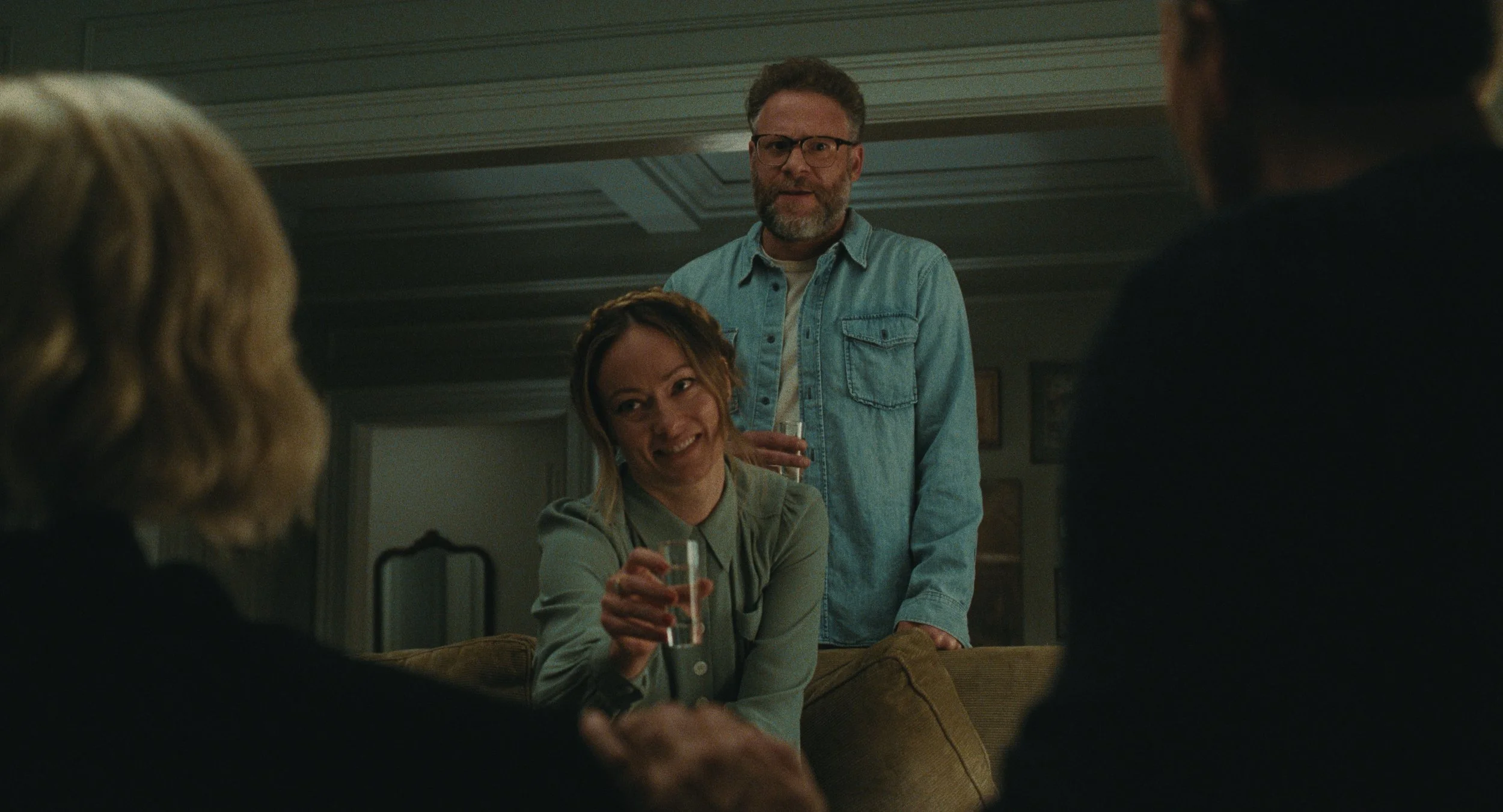
Image courtesy of A24
“Do you want to try again?” Olivia Wilde’s character Angela asks her not-so-adoring husband Joe, played by Seth Rogen, after his ill-received, exasperated entrance into their posh California home.
After her last film about marital discontentment, “Don’t Worry Darling,” was eclipsed by intra-cast relationships, “Spit-Gate,” and Chris Pine’s unruly mane, Wilde is trying again. But, unlike Joe’s unsuccessful second attempt at pleasantries, her new movie “The Invite,” a film about a rocky marriage disturbed by an unexpected dinner party which Wilde directs and stars in, enters the cinemas swinging triumphantly.
Wilde has always been a maven of relationships on the brink. Similarly to her first film, “Booksmart,” unheeded growing-pains befall “The Invite”’s two central characters, Angela and Joe, with their attempts to cling onto one another for domestic safety only more eviscerative. Joe, a former member of a one-hit wonder band turned music teacher at a midtier conservatory, is surprised when Angela, his bygone muse, a failed artist and an antsy housewife, invites their enigmatic upstairs neighbors over for a dinner party to apologize for their recent, noisy renovations, which are all finished except for, you guessed it, in the bedroom.
“[My films] are all about the point at which a relationship is at crisis and needs to be investigated,” Wilde told The Avenue during an intimate panel in Boston this May. “With this film, I really wanted to strip away every other device” — no incel simulations or “Training Day”-inspired high school party supercuts needed — “to just focus on that experience of a relationship at that point.”
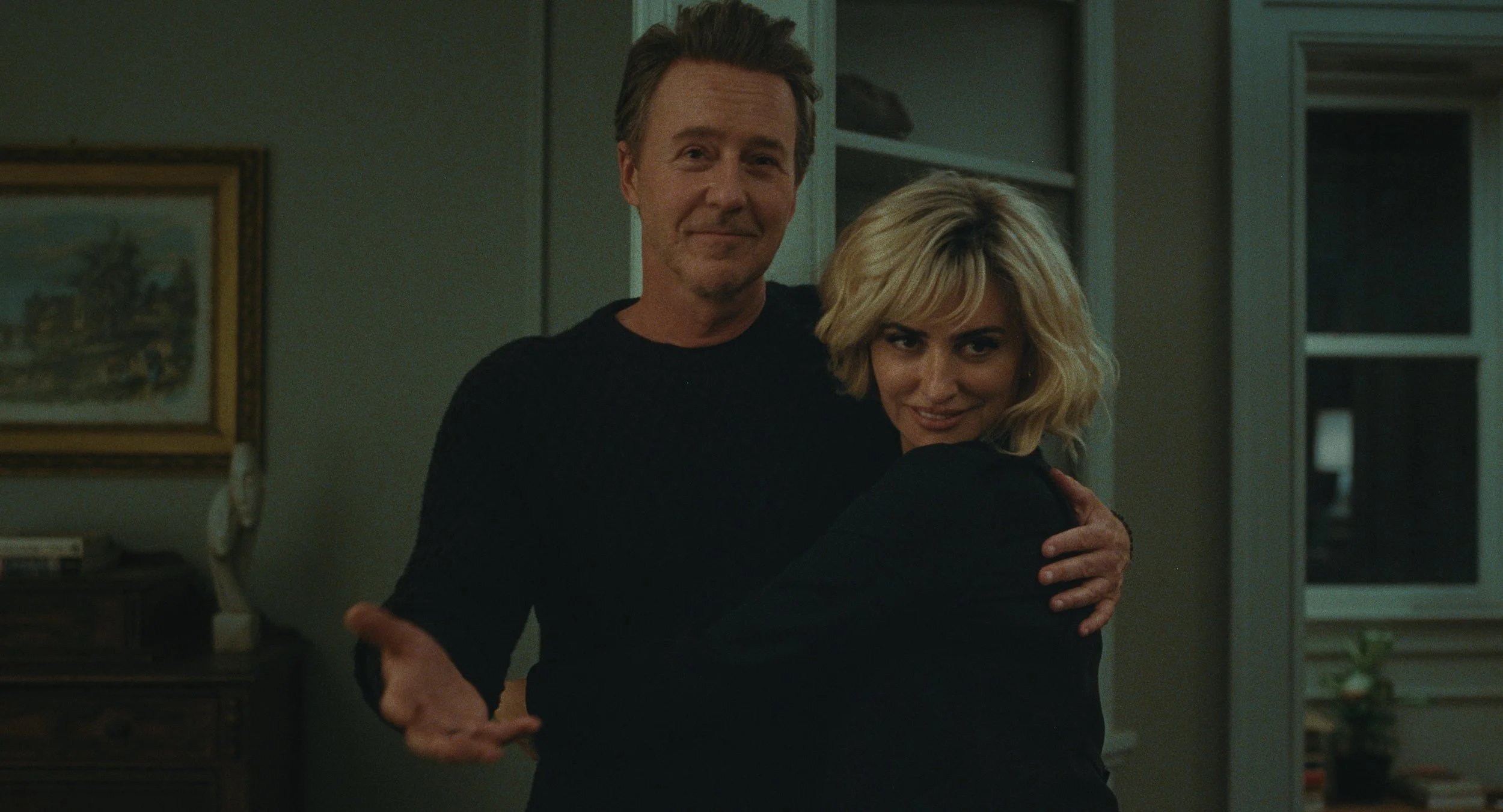
Image courtesy of A24
There is, of course, enjoyable poppycock that invades Joe and Angela’s relationship the moment the other couple — their functional opposites — arrives. Pína (Penélope Cruz), a psychoanalyst and sex-pert, and Hawk (Edward Norton), a rug-loving ex-firefighter, bring a “life changing” flan with a side of philosophical quandary, the proposal of an orgy, and unexpected cross-couple companionship to the fête. Their arrival breathes life, if only momentarily, into Angela and Joe’s marriage, leaving audiences guessing if this is their saving grace or their final straw.
“I realized that once we were in that confined space, we should just stay there and allow the audience to feel the mounting claustrophobia and tension with the characters,” Wilde said. “I'm so glad we did, because we often underestimate the audience’s propensity for patience and tension. People have this real capacity for silence in a way. Filmmakers don't feel safe trusting [viewers] will withstand.”
And while it is her most stripped-down work to date, Wilde believes the witty, heartfelt comedy is also her most conceptual and profound film yet.
“Everything people are saying is incredibly revealing about the relationship, or who they are or what they think of another person,” she continued. “Even a simple conversation about what Seth’s character Joe does for a living is, on the page, a very simple conversation. He teaches at a music school; but the way we film it and the way we perform reveals that this is actually a conversation about self-respect and resentment and failure.”

Image courtesy of A24
By shooting the film, adapted by Rashida Jones and Will McCormack from the 2020 Spanish film “The People Upstairs,” sequentially over the span of 23 days, the cast of four had time to grow into their characters in the natural cadence the two couples would blend and intermingle. This minted improvisation as a major driver in the progression of the story, not only over the 107-minute runtime, but throughout the condensed shooting schedule.
A Sade needledrop shared between Pína and Joe — one of the most intimate scenes in the film — was an idea of Cruz’s mid-filming (“Sade is so fantastic, she's definitely expensive,” Wilde laughed. “Luckily we were able to get that song. She’s the ultimate queen.”) Hawk’s sentimental, vulnerable monologue about his name, which becomes the first bridge between himself and Joe, was also a last-minute addition, improvised on the spot by Norton.
“I think, as a director, you need to know the intentions, but be very open to the solutions,” Wilde told The Avenue. “[Norton] said, ‘I have a story I want to tell, and I just want you to film the reactions first.’ So we did that, and what you see on camera [are] everyone’s real reactions in that moment.”
“Some of the most interesting parts of the movie, to me, came out of discoveries that happened during prep and during production,” Wilde continued. “This was controlled chaos.”
