
Review: Emerald Fennell’s “Wuthering Heights” is visually stunning — but still falls flat
Nina McCann
03.18.2026
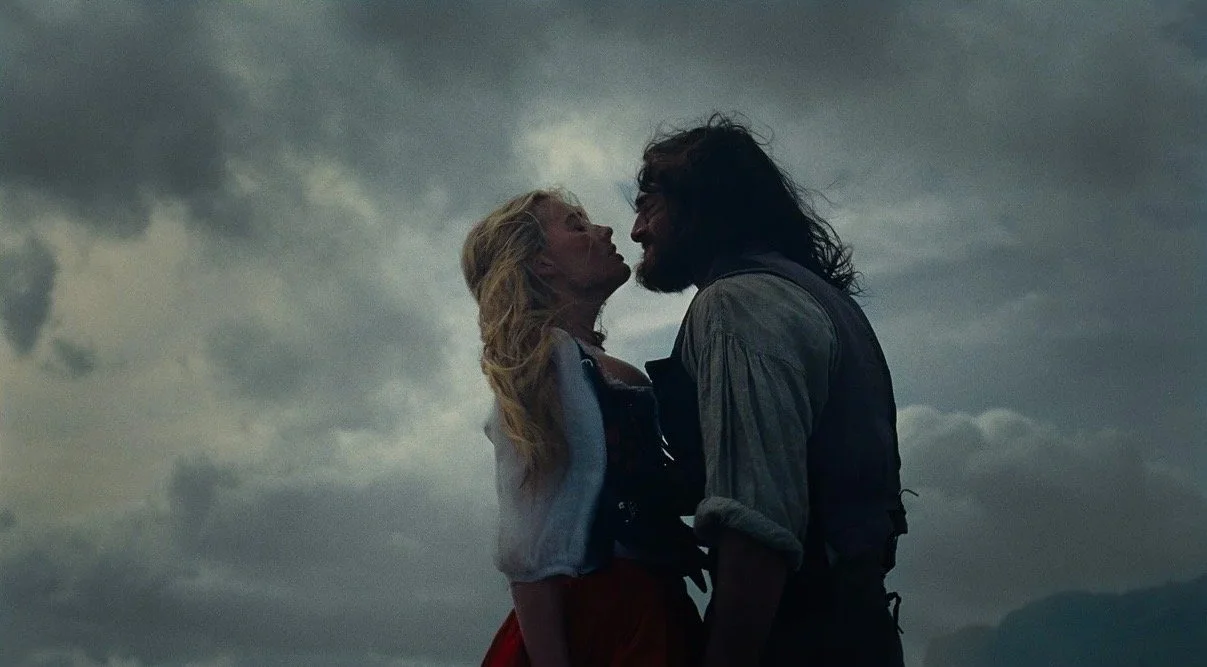
Credit to 2026 Warner Bros. Ent
The reviews of Emerald Fennell’s “Wuthering Heights” poured in well before its release. The casting controversy around Jacob Elordi’s Heathcliff resulted in many fans of the book immediately condemning it, but some still held out a flicker of hope for the Emily Brontë adaptation. The slightly modified title, use of anachronistic accessories and, most promisingly, the use of a dollhouse mimicking the real set and characters, led viewers to believe that the most recent of many adaptations would be a purposeful misreading of the book with an interesting enough ending to justify the means.
Their hopes would be dashed upon viewing.
Fennell strips a dark, emotionally complicated novel that explores race- and class-based discrimination and generational cycles of trauma into a gorgeous but hollow film.
Most of the online discourse surrounding the movie is criticism of Heathcliff’s race change. In the novel, he is referred to as “lascar” — a South or Southeast Asian sailor — and “dark-skinned.” One character states, “Who knows but your father was Emperor of China, and your mother an Indian queen.” Fennell’s Heathcliff, played by Elordi does not match these descriptions. Like most Heathcliffs of adaptations past, he is white.
In defense of a white Heathcliff, it is entirely possible — and likely — that Brontë intended to portray him as an Irishman. Around the novel’s release in 1847, the Great Famine in Ireland resulted in an influx of migration to England, exacerbating the everpresent xenophobia against the Irish. Political cartoons and writings of the time likened Irish people to monkeys, and English high-society harbored the same intense discriminations against them as Indian and Black people. They were seen as a lower tier of white people, separated by their “less civilized” culture and their tanner skin from outdoor labor.
Heathcliff’s exact race is left ambiguous, and is a point of contention throughout much scholarly discussion of the novel. However, what is made clear is that his race is a large part of what sets him apart from the Earnshaw family, what he is constantly berated and made an outsider for.
Fennell’s film is “Wuthering Heights” translated and sex-ified for modern audiences. Why then, could the Victorian conceptions of race not be translated here as well? Director Andrea Arnold’s 2011 adaptation presents a Black Heathcliff, played by James Howson. Even without Arnold’s adaptation’s addition of racial slurs used towards Howson’s Heathcliff, the degradation he faces at the hands of Hindley Earnshaw — Catherine’s brother, whom Fennell omits — immediately translates as racially motivated to modern audiences, in a way that would not with a white actor in the role.
Even if Elordi’s Heathcliff may be an accurate picture of a darker Irishman, the colorblind casting of other characters makes this a major misstep. Nelly and Edgar Linton, the two biggest obstacles to Cathy and Heathcliff’s romance, are played by a Southeast Asian woman and South Asian man. Any potential readings of Heathcliff’s abuse as racial are completely dissolved by having other, more clearly ethnic, characters in the story. Beyond this, Nelly is outright vilified in this adaptation, not only through the canon-established situational manipulation of causing Heathcliff’s abscondence, but also through directly facilitating Cathy’s death.
Fennell’s treatment of Nelly displays perhaps her greater blindspot than race — class. Born into a wealthy English family of creatives, Fennell attended prestigious schools all her life, ending up at the University of Oxford. According to fellow Oxford alum and Variety writer K.J. Yossman, Fennell was “part of a rarefied social set whose family names [Yossman] recognized from gossip columns and history books … Balfour, Frost, von Bismarck, Guinness, Shaffer.”
In the book, Nelly is an unreliable storyteller who, at worst, contributes to Heathcliff’s social isolation and downplays the abuse of a family to whom she is behest. While this in itself is negative enough, Fennell is dissatisfied and turns Nelly into the most conniving character in the film, who ends up killing Cathy through her willful neglect.
This isn’t the first time Fennell portrays a less wealthy character as morally bankrupt and ungrateful. In “Saltburn,” scholarship student Oliver Quick manipulates and kills the aristocratic family that welcomed him, whose biggest flaw is only their out-of-touch attitudes. In a similar fashion, “Wuthering Heights” depicts Nelly, a character dependent on the Earnshaw family, manipulating her way into destroying Cathy’s love and life. In both films, the rich are naïve to a fault, while the poorer characters are cunning and vindictive.
Like most other film adaptations, Fennell almost completely disregards the second volume of Brontë’s novel. With her removal of the second generation of the narrative, she excludes Hindley, Cathy and Heathcliff’s children. By neglecting to display the generational cycles of abuse and revenge Brontë depicts in the novel, Fennell varnishes the tale into simply a “dark romance,” and removes the only actually hopeful romance within the book (between Hareton Earnshaw and Catherine’s daughter, also named Cathy), one that displays the chance of breaking free of these toxic cycles.
But, what makes Fennell’s adaptation really fall flat is the lack of build up to Healthcliff’s bad behavior. His relationship with Isabella — Linton’s sister in the book and ward in the film — feels underdeveloped, last minute and random. The film removes Heathcliff’s murder of her dog, and his abuse of her is downplayed into a dominant-submissive sexual relationship. Rather than a man who returns to Wuthering Heights with a cruel and perhaps justified desire for revenge, Heathcliff instead takes the shape of rough-around-the-edges underdog, gentle and profound in private.
This is how the film so easily morphed into a BookTok-esque romance, with online ads painting it as such, showing moviegoers feral for Heathcliff or having the cast encourage Galentine's theater trips.
While there were seemingly countless issues with the film's deviations from the book, the one thing Fennell excelled building was the film’s visual aesthetics. “Wuthering Heights”’s foray into camp and use of vibrant colors are commendable. Like her previous work on “Saltburn,” the film’s visuals and sets were enrapturing. Wuthering Heights and Thrushcross Grange were constructed in studios, and behind-the-scenes tours show the elaborate detail of each. The use of a modernized wardrobe was a bold yet successful choice that distinguished this adaptation from the rest.
Fennell’s use of sex is also a positive. The novel was salacious and scandalous at the time of its release, and translating Heathcliff and Cathy’s raw obsession and desire into sex is a seamless modern interpretation.
However, it's not nearly as lewd as it could have been. The opening scene sets up a movie that blurs the lines between death and sex, with a hanged man’s gasps laid over a black screen, sounding erotic, and his mid-mortem erection leading to a sexual frenzy among the onlookers.
Fennell told USA Today today that the scene “[sets] the tone for the rest of the movie … surprising and darkly funny … arousal and danger are kind of the same thing.” These early hopes for a darkly comedic take on the conflation of eroticism and peril are dashed as the affair between Cathy and Heathcliff is portrayed. The most indecent and unexpected thing they do to each other is place eggs under each other’s bedsheets as a prank. The scene that garnered the most gasps was one where Heathcliff elegantly lifts Cathy by her corset strings. Far more sexual deviance is shown in the servant Joseph and Zillah’s barely-visible sex scene, but there’s nothing really groundbreaking about some offscreen BDSM-lite.
What is left of the original story: barely anything. In order to appreciate the film, you must pretend it is not an adaptation. Most of Fennell’s narrative changes would be fine, maybe even great — if she were only able to supplement the story removed with one of equal value.
What does the story that takes its place say? If viewers squint, they can make out a somewhat erotic mid-tier love story with beautiful visuals and middling lead performances. But what made Brontë’s “Wuthering Heights” interesting is that it was not solely a love story: The romantic relationships serve as a catalyst for revenge, a symptom of cyclical abuse, an exploration of codependency and a glimmer of hope against these.
Fennell’s “Wuthering Heights” isn’t solid in its own right. Adaptations are received well when the changes are made well, but here, the deviations from the book are misguided and serve no end. The result is a hollow, beautiful shell — another example of Fennell’s adept directing capabilities but bafflingly poor screenwriting. At least it gave us the hauntingly beautiful track “House.” Perhaps her next endeavor should be a Charli XCX music video.
