
Remakes and Sequels and Biopics, Oh My!
Isabella Bernstein
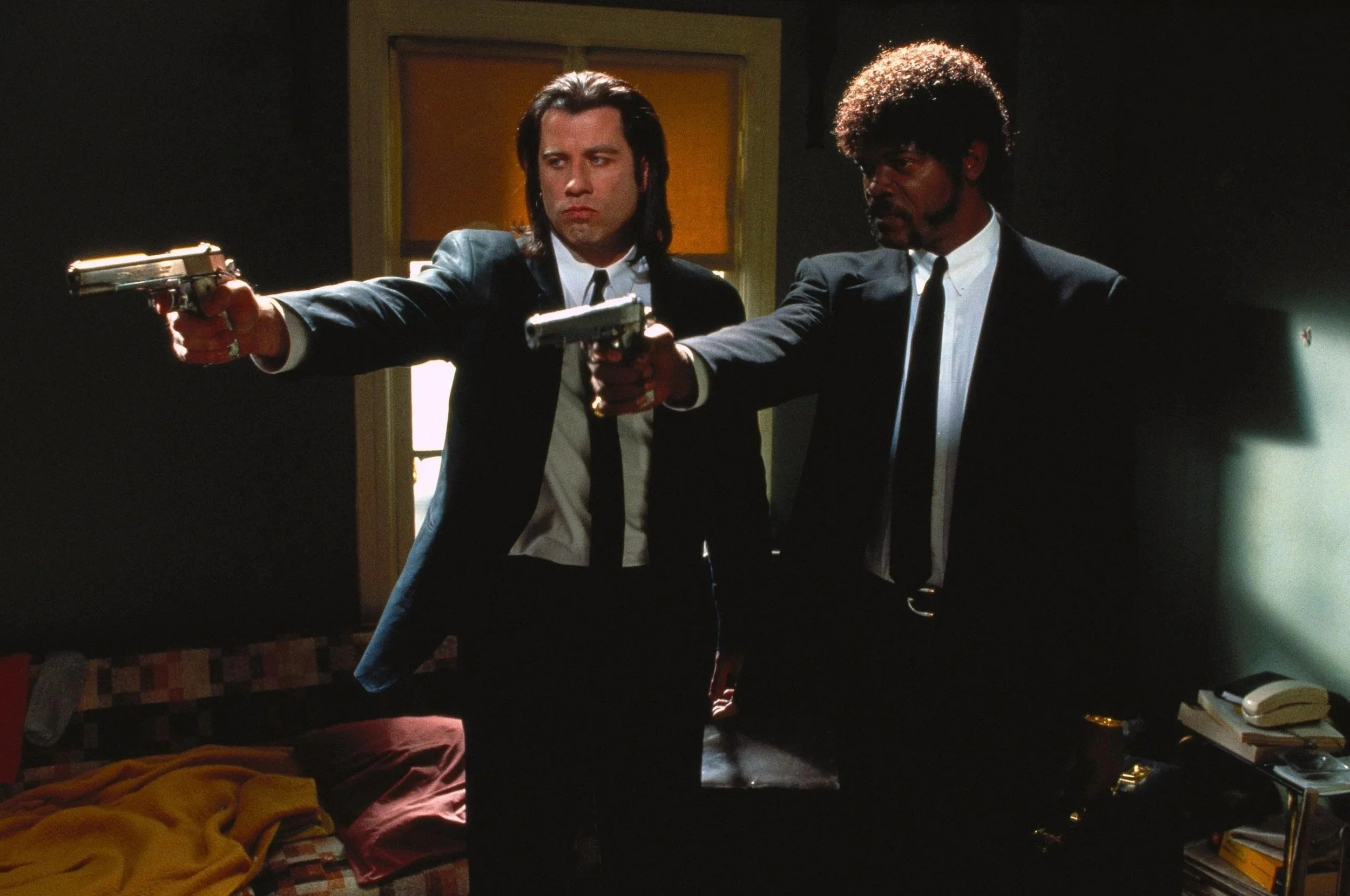
Photo Credit: Miramax
Mar. 12, 2025 — Within the span of five days in December of 2024, movie theaters around the world premiered “Mufasa: The Lion King,” “Sonic the Hedgehog 3,” “A Complete Unknown,” and “Nosferatu.” All these box office hits differed in their content but still had one thing in common: None are novel screenplays. In fact, most successful movies last year were not. Of the 20 biggest box office hits, none were truly original stories.
Hollywood hasn’t had the comeback it’s been hoping for since the COVID-19 pandemic. Domestic box office grossing has yet to recover from the pre-pandemic heights of 2015 – 2019, with 2024 marking another year to fall short of previous levels. As numbers of running cinema screens continue to decrease, and streaming services become a more popular way for Americans to consume new content, the silver screen industry seems to be caught in a spiral it hasn’t figured out how to escape. It’s not that less movies are being made, it’s that less people are going to see them. Movies now have to be a guaranteed hit to make it worth it for studios to put them in theaters; familiarity seems to be golden ticket for films to hit the big screen
But, this avalanche of formulaic film isn’t solely a byproduct of the post-pandemic industry: The rise of comic book franchises and their irrevocable peak in 2018 – 2019 bombarded hungry audiences with 19 superhero films from major production companies, grossing around $6.4 billion dollars at American and Canadian box offices. Despite their financial success, these films are not always well received by others in the film industry — being deemed as “lacking artfulness” (Vice) and the “emotional danger.” (New York Times.)
“They don’t make the movies anymore that inspired me to make movies,” said Seth Fisher, a screenwriter and producer working in Hollywood.
Fisher cites childhood films like the first “Back to the Future” as well as current films like “The Brutalist” that inspire him to “impact people the way they impacted me.” It’s not the fourth “Captain America” or the eighth “Transformers” that push creativity onto the public and invigorate our lust for life — it’s the new story that provokes us to look at ourselves and our surroundings in a different light, even if just slightly.
Movie theaters are making less money, and we don’t know when, or if, this will turn around. A mixture of the unlimited content on Max or Hulu and the mere fact that more Americans prefer watching movies from home seems to be slowly dooming the cinemaplex.
But, maybe it’s also because movies are getting boring. And we are getting tired of being mama-birded by the film industry stories we have, in one way or another, already consumed.
The film industry is inherently risk averse, and for understandable reasons. Feature length films are expensive to make and can be even more expensive to produce. Production companies have to be cautious not to spend tens or hundreds of millions on a movie that audiences are uninterested in, don’t end up liking, or, worse of all, never end up hearing of; large gambles with audience engagement are unsettling for those invested in film creation and production.
Reliance on premade and repackaged stories are safer than risking big budgets on non-audience tested, non-market researched scripts. The current massive boom in biopics is not because biopics are groundbreaking, world-changing artforms — it’s because the story is already writtenand, depending on the subject, they are nearly guaranteed to break even. An existing story about a celebrity (played by a celebrity) doesn’t need to be a filmic achievement to be a hit. Even if the film doesn’t go down in cinematic history, people want to see Elvis and Tonya Harding and Elton John cavort around in the glory of ultra-high-production value 4K resolution.
Nostalgia may be a sweet kind of sorrow, but its propensity for familiarity may prove fatal to new film production. People love seeing their favorite celebrities play familiar characters because it’s comforting. We know how the story ends or how the story may end or that the story hasn’t ended. But the gifts of celebrated stardom and confident continuity are not accessible to all, especially lower budget and smaller production films. Studios and audiences are less inclined to take a chance on a story they don’t know with actors they don’t recognize — but they should.
Because without risk there is no reward. Franchise and follow-up fatigue looms over movie goers — long gone are the days when smaller budget media with new intellectual property stimulated viewers through wide release. Novelty is dangerous, because, what if it doesn’t pay off? But, more importantly: What if it does?
Hollywood is the land of dreams, but passion and innovation may no longer be the golden ticket to achieving them. For the most part.
Independent film and arthouse production companies are, in the same breath, the foil to and the savior of the film industry. Without taking a chance on ordinary newness, we would never have “Good Will Hunting” or “Moonlight.” We wouldn’t have stars in our eyes watching Wes Anderson’s pastel wonderlands or lumps in our throats witnessing Greta Gerwig’s perfecting of the human condition. We have to take a chance to move forward; no wonder we feel stagnant. No one in the industry starts out making $100 million sequels about comic book Vikings or CGI fairytales — no one of importance that is.
It’s not that we need a “Pulp Fiction” to pull us out of this rut — the grandeur and simplicity of true art exists in the world, we just need to appreciate it.
The only caveat is that now, we have to search high and low for the feeling the movies used to give us. Our AMCs and Cinemarks are not showing the pictures that do this quite enough. Our entertainment gods seated high on the Olympian Hollywood hills are not funding them. We need more A24s roaming the Earth, harvesting the brightest, boldest, weirdest minds to present to audiences. We need more people to pluck the young creatives from their suburban homes or their inner-city apartments or their rural roads and replant them in the cultural consciousness as the next narrators of our time.
What excites creatives and audiences is not more of the same, but an affinitive and engrossing humanity within film. An animation executive at a major television studio, who will remain unnamed as a protection to his position, named a relatable and almost proverbial character as the cornerstone of what he thinks makes an evocative and interesting piece of media. Creatures habit, we surely are: We enjoy stories with new characters who remind us of ourselves and of the people in our lives, he said. But the key to cinematic success is still defying audience expectations in a way that feels dangerous yet exhilarating.
The cursed revamp of old IP is not going away anytime soon, but there may be a way to sculpt it into a blessing of nostalgic novelty.
The executive cites “Barbie” as the perfect example of this. Not exactly original IP, but Barbie is a character owned and operated by Mattel and known and beloved by the public. The film seems to make a mockery of Mattel and the idea of Barbie herself, as the Mattel board room is filled with middle aged men and Barbie seeks more than the perfect girl-power career-driven life she has taken on for the past few decades. The executive cites the intrinsic sense of, “How could Mattel ever let them get away with this?” is what made Barbie such a success in the cultural zeitgeist. It’s newness, its transformation of something familiar, is what makes it creative, thrilling and original.
“You want something that has one foot in the familiar, and one foot in the novel,” the executive said.
In this defense, some of our greatest cinematic feats are not always technically original stories. Yes, “The Wolf of Wall Street” is a biopic, and yes, “The Princess Bride” is based off a book, and, okay, yes, the “Scarface” we know is a remake. But all these creatives brought something new to the table. All transformed something existing into something treasured through shock and awe.
The film industry changed the world. Art and power and sadness and controversy and provocation and advocacy and empathy were provided to all, not just those with the means and inclination to attend the theatre or contemplate gallery showings or roam the ruins of our past. Film afforded us a chance to explore worlds we could never visit, cultures we would have never known existed and, most importantly, showed ourselves to ourselves in ways no other medium could.
At face value, the industry is a business, but in its soul, it is an artform that has constantly reinvented itself with bursts of shocking newness. Old stories and technologies are destroyed to make room for the ever-evolving sense of the human condition, always at the risk of failure, always with the reward of originality and progress.
We must wield our loyalty to the illustrious past of cinema as it is our stepping stone to consume and cherish the world around us. Without that, how do we expect to evolve?
