
Featuring Diane von Fürstenberg, Eckhaus Latta and Coach
Brynn Fleisig
11.04.2026
Fashion often focuses on a singular facet of identity. Sexy or sensible. Rebellious or uniform. Soft or robust. This New York Fashion Week rejected the binary altogether: From Diane von Fürstenberg to Coach, the best runway shows posited that great fashion doesn’t neglect any elements of the wearer’s identity.
Diane von Fürstenberg
Henry Zankov didn’t resuscitate Diane von Fürstenberg with his spring 2027 ready-to-wear collection, but rather showed the brand’s eccentric heart never needed saving. Referring to the tenets of DVF — sexiness, vibrancy and a splash of letting loose — Zankov told The Cut, “Everything is already there. It’s really about how to work with it.”
Years of designing for his eponymous label have established Zankov as the maestro of knitwear. The designer firmly believes in establishing a “visual vocabulary” for a brand, and for many years, that vocabulary consisted of knitted handiwork. As of this past February, however, he’s ready to evolve beyond his foundational knits at both brands, and the DVF show precisely demonstrated this emergence.
The Sept. 10 show blended contemporary exuberance with DVF’s classical shapes, proving an indulgence in color and vibrancy does not have to mean sacrificing sophistication (as yet another revival of ’90s staples this past year with “Love Story” has misled novice fashion-goers to believe).
Patterned wrap dresses strode the runway and neon blue midi skirts followed, conveying something of absolute-authority-meets-vacation-like-carefreeness.
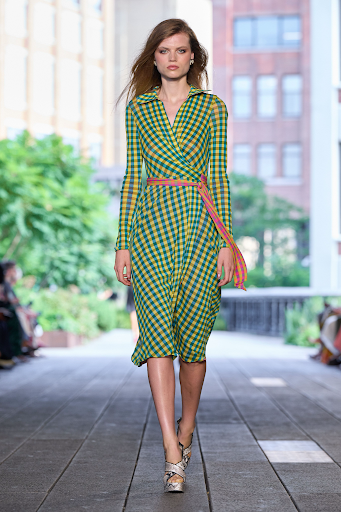
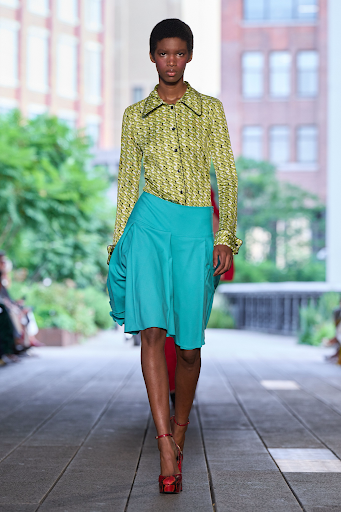
Zankov’s unwavering vision for DVF is, in part, what made the show as distinct as it was. On the day of his appointment as creative director this May, he divulged to Vogue his interpretation of the brand: “ease and effortlessness and intention.” In the four months since, that understanding has held steadfast. “DVF is really all about confidence and seduction and effortlessness,” Zankov told CNN on the day of DVF’s show. This groundwork was laid by von Fürstenberg herself, who, of course, sat front row to cheer on Zankov’s work.
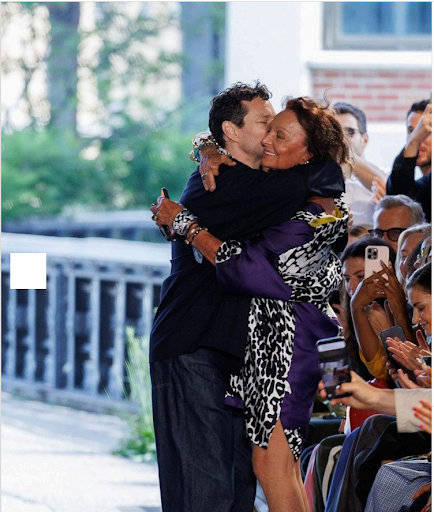
Photo courtesy of Allure via Instagram
What sets Zankov apart at New York Fashion Week is his commitment to pieces over looks. A blouse with illustrated horses and a royal-violet-meets-leopard-print dress (one that DVF herself wore sitting front row) each have an unmistakable presence. Each garment depends not on the rest of the outfit to be cohesive; Zankov’s pieces stand on their own, able to sell themselves without needing a counterpart to be desirable.
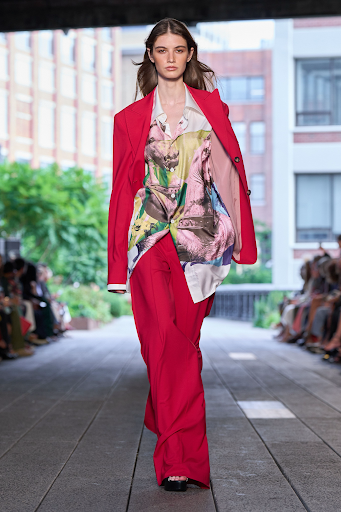
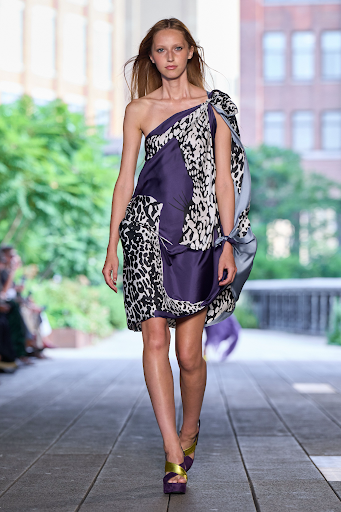
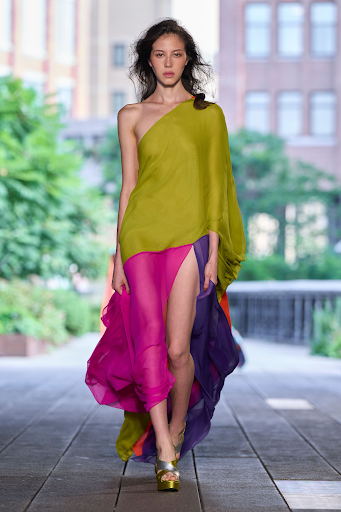
The thesis of the collection was unapologetic personal style made for women as individuals, not just consumers. “I don’t think about this brand as necessarily just a fashion brand, I think it’s a brand about women,” he explained. “I mean, they come first. The person comes first.”
Through bold colors and patterns for days, various personalities are encapsulated in their most saturated form, providing something for everyone to impart their proudest self.
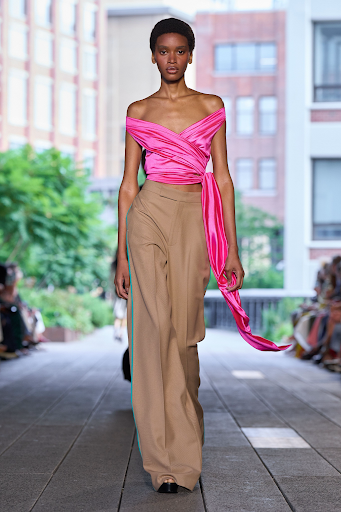
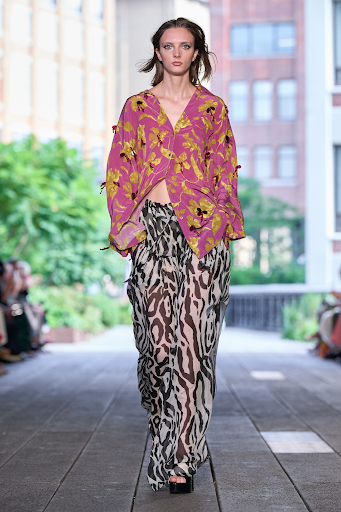
Confidence and love are ubiquitous throughout the collection. What more could be asked of a New York Fashion Week debut?
Eckhaus Latta
Between the highly anticipated Diane von Fürstenberg and Coach shows at New York Fashion Week, viewership became an earned privilege in the media this past week. At a time when every brand is screaming “Look at me!” Eckhaus Latta reminded critics that something fresh doesn’t need to be loud.
In the wake of its spring 2027 ready-to-wear show on Sept. 11, Eckhaus Latta was dubbed “The Breakthrough Show of New York Fashion Week” by The New York Times and “a jolt of newness” by The Cut. What earned the fashion house such titles? Distilling clothing into a purified product at the equilibrium between intentionality and unconcern.
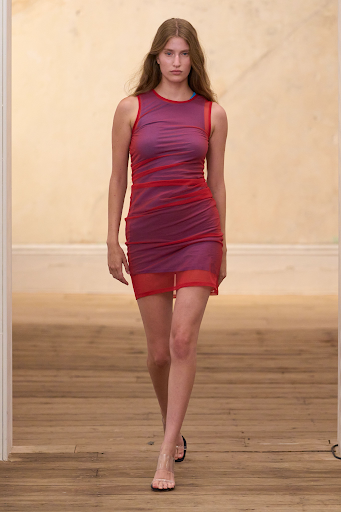
The show was divided into two parts, much like the pieces. In the first half, twice-layered colored mesh tops and dresses gathered differently on each model.
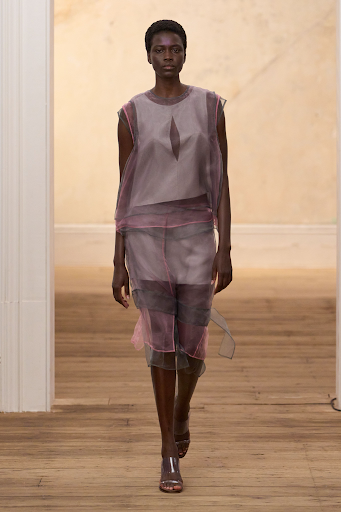
The perma-wrinkled midi skirts ebbed and flowed on the runway with every stride. It’s the type of skirt that if a girl walked past you in it, you would be prompted to wonder if it was crumpled on her bedroom floor before she got dressed or taken fresh off the rack from a brand you can’t pronounce. Maybe both.
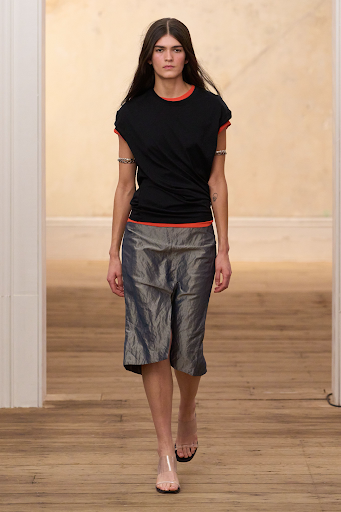
Pieces throughout the show were cut on the bias, hugging shoulders and slipping off hips in the most complimentary ways, adding to the collection’s bespoke effect.
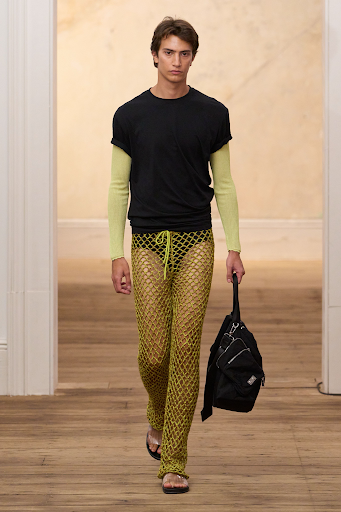
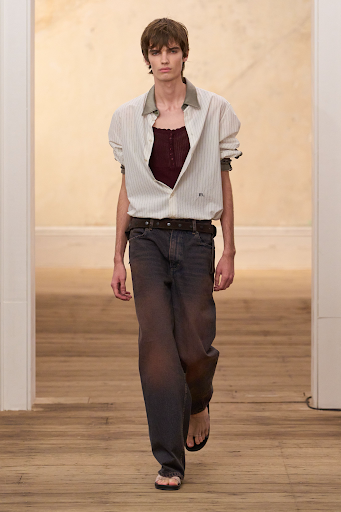
The audience was shown denim jeans in a variety of autumnal washes followed by pairs of gaping crocheted pants, reminiscent of the breezy freedom that summer weather permits. The netted pieces doubled as a reminder of the promiscuousness granted by maturity — contrasted by the second set of looks soon to follow.
Before the show began, envelopes sat on each chair containing confetti for the audience to toss upon the runway during the second half of the show, celebrating Eckhaus Latta’s second J.Crew collaboration.
As the show’s second half commenced, the new looks walked out, and the confetti was thrown. The collection confirmed two things: prep wear is back for the fall (whether or not you’ll choose to indulge) and Eckhaus Latta’s style is not reserved for risk-takers.
The clothes were younger, but no less sharp.
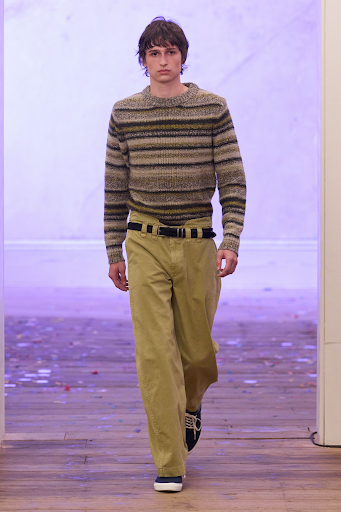
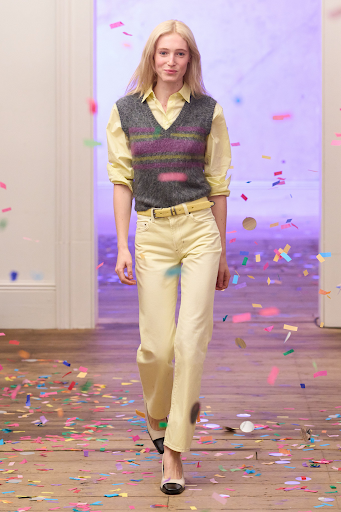
There were butter-yellow pants, classic wool knits and thick belts. The collection’s classic prep undertones were accompanied by the brand’s unmistakable garment intentionality. Whether via the sharp angle of collars, doubled belt loops or other unobtrusive details, each piece had a distinctively original undertone, imbuing regular clothes with the Eckhaus Latta imagination.
Eckhaus Latta doesn’t reinvent the wheel. It alters it ever so slightly, making something familiar feel fresh every time, all without losing practicality — which is why there’s no sign of the brand slowing down anytime soon.
Coach
Like Eckhaus Latta, Coach too had reason to celebrate. It was the brand’s 85th birthday, and nothing less was expected than a party on the runway.
Despite the celebratory nature of this Stuart Vevers-designed runway show, which was complete with models donning party hats and clutching wrapped presents, the inspiration for the collection was reminiscence. “Once you decide you’re doing a party, an anniversary, you start to become sentimental,” Vevers said to Vogue during a preview of the collection.
The pieces themselves varied between familiar, sleek and jubilant. Between multicolor sequined floor-length gowns and streetwear references, one would never know that subtext was nostalgia.
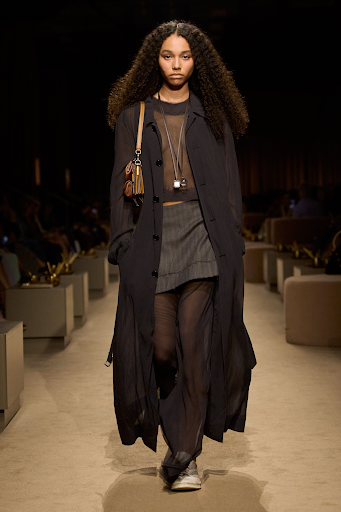
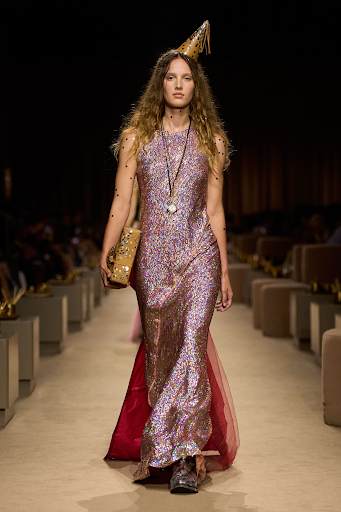
Vevers’ exceptional ability to use the past as inspiration to celebrate the brand without creating clothes that feel redundant is a testament to his skill and the longevity of his work.
Garments’ leather was made to look worn and softened, and an inside-out effect was accomplished by visible tailoring and exposed linings.
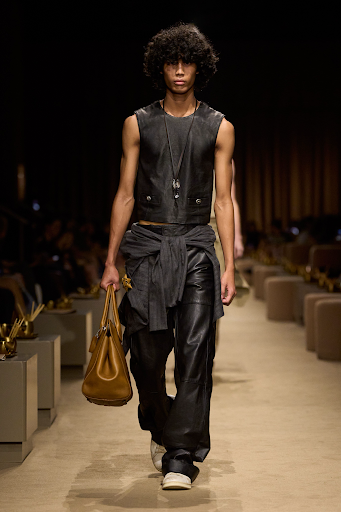
Pieces felt beloved and familiar — a sense that was carried into the accessories.
The Turnlock Tote Bag 40, based on a 1970 silhouette by Bonnie Cashin, Coach’s first lead designer, was the show’s motif of celebration and nostalgia. The sun-worn leather tote was smothered in confetti and the legacy design demonstrated Coach’s capacity to balance tradition with trends.
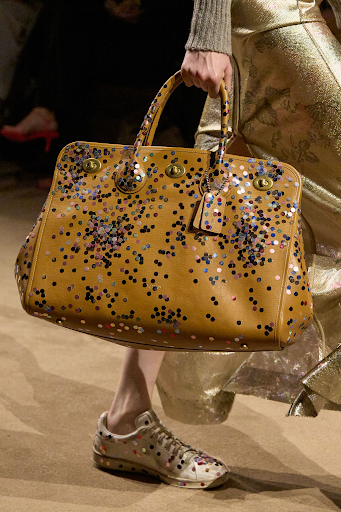
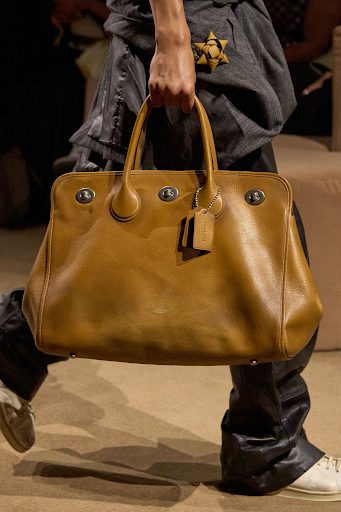
Anniversary or not, the fashion still has to stand on its own. Spectacle does not substitute substance, and unwavering fashion should remain when the facade of celebration fades.
Sheerness and slacks are two common threads throughout recent fashion week shows that are impossible to ignore. Coach happened to nail both.
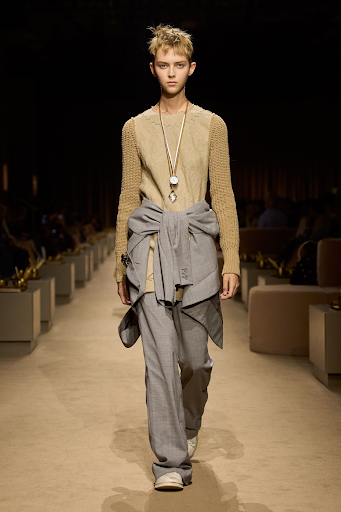
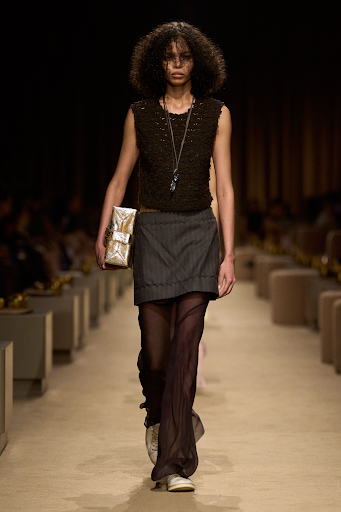
Portraying freeness and restraint at once, the ultra-thin fabric and lengthy pants alternated on models throughout the show, yet they articulated the same message: “I care what you think, to an extent.”
This ambiguity was part of Vevers’ inspiration for the show and rooted in the anniversary the collection celebrated. “I like memory as a source of inspiration because it’s not really fixed. It’s not exact.”
Not exact is exactly the way to describe it. The pieces were simultaneously chic, rebellious and wearable. The Coach show set a new precedent for clothes existing in glory without glorifying the purpose of their existence. See-through mesh and sequined sets might not be an everyday choice, but just like Coach, they aren’t meant to be. They’re meant to be once in a lifetime.
Conclusion
The recurring theme in all New York Fashion Week shows was that one doesn’t need to sacrifice. Coach demonstrated how to honor the past and evolve simultaneously. Diane von Fürstenberg proved liberation is always in style. And Eckhaus Latta balanced all, the intersection of sharp authority meeting the confidence to play. Sexy or sensible, rebellious or uniform, soft or robust: This season, the best shows’ answer was yes.
