“Who are You Wearing?”
Brynn Fleisig
12.03.25
Demna Gvasalia’s transition to Gucci after his decade-long role as Balenciaga’s creative director is a shift long awaited by the world of couture, media and your closet. Delightfully, the wait was shorter than anticipated.
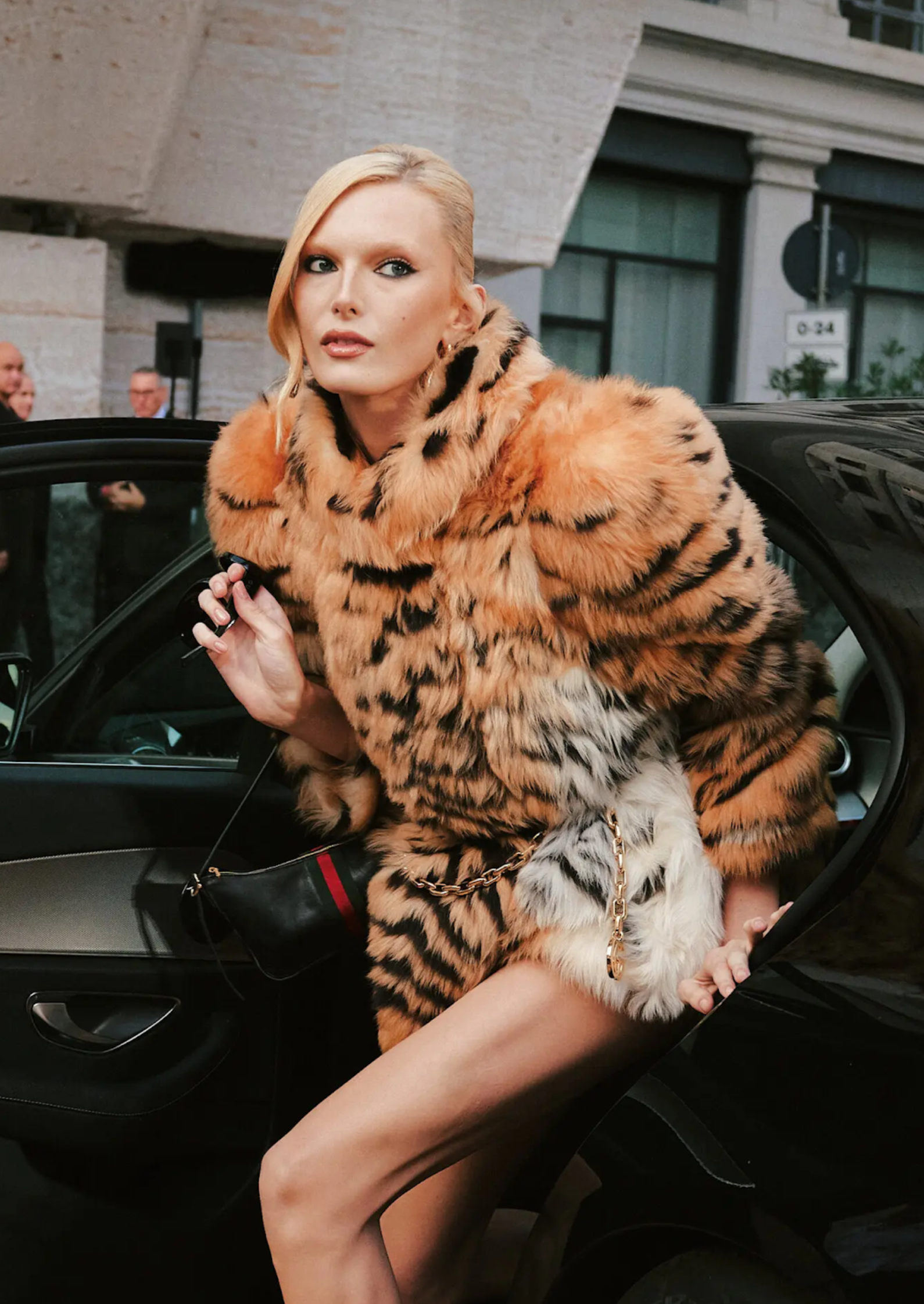
Demna’s debut collection titled “La Famiglia”, translating to “The Family” in Italian, was featured in Milan Fashion Week. Rather than a traditional runway show, Gucci released a short movie titled “The Tiger” to serve as the collection’s formal introduction into the world of fashion. The world was unaware of how radical Demna’s Gucci takeover would be or what direction the brand was headed for, but the debut collection silenced all speculation.
Subverting fashion norms serves as the ideological essence of “La Famiglia”, and while rebellion might be unfamiliar for Gucci, it’s what Demna does best.
Demna’s Dilemma
Risk is a last resort for a brand like Gucci — one characterized by loyalty to the house’s long-standing aesthetic. Built on power, tradition and legacy, the fashion house seldom strays from their brand image of class and sophistication. So, why start taking chances now?
From 2016 to 2022, Gucci’s brand value increased by nearly thirteen billion dollars, but in 2024, profits dropped a staggering 46%. The dramatic decline has been attributed to customers' lack of emotional response to Sabato De Sarno’s collections during his time as creative director from 2023- 2025 . This revamp wasn’t optional — it was a life raft to save the house from drowning in impending irrelevance. After all, “Gucci stands for fashion authority,” says Stefano Cantino, Gucci’s chief executive. He explains that Demna was chosen because of his opinionated and strong designs, along with his “understanding of contemporary culture, of what is luxury today and a deep understanding of the new generation”.
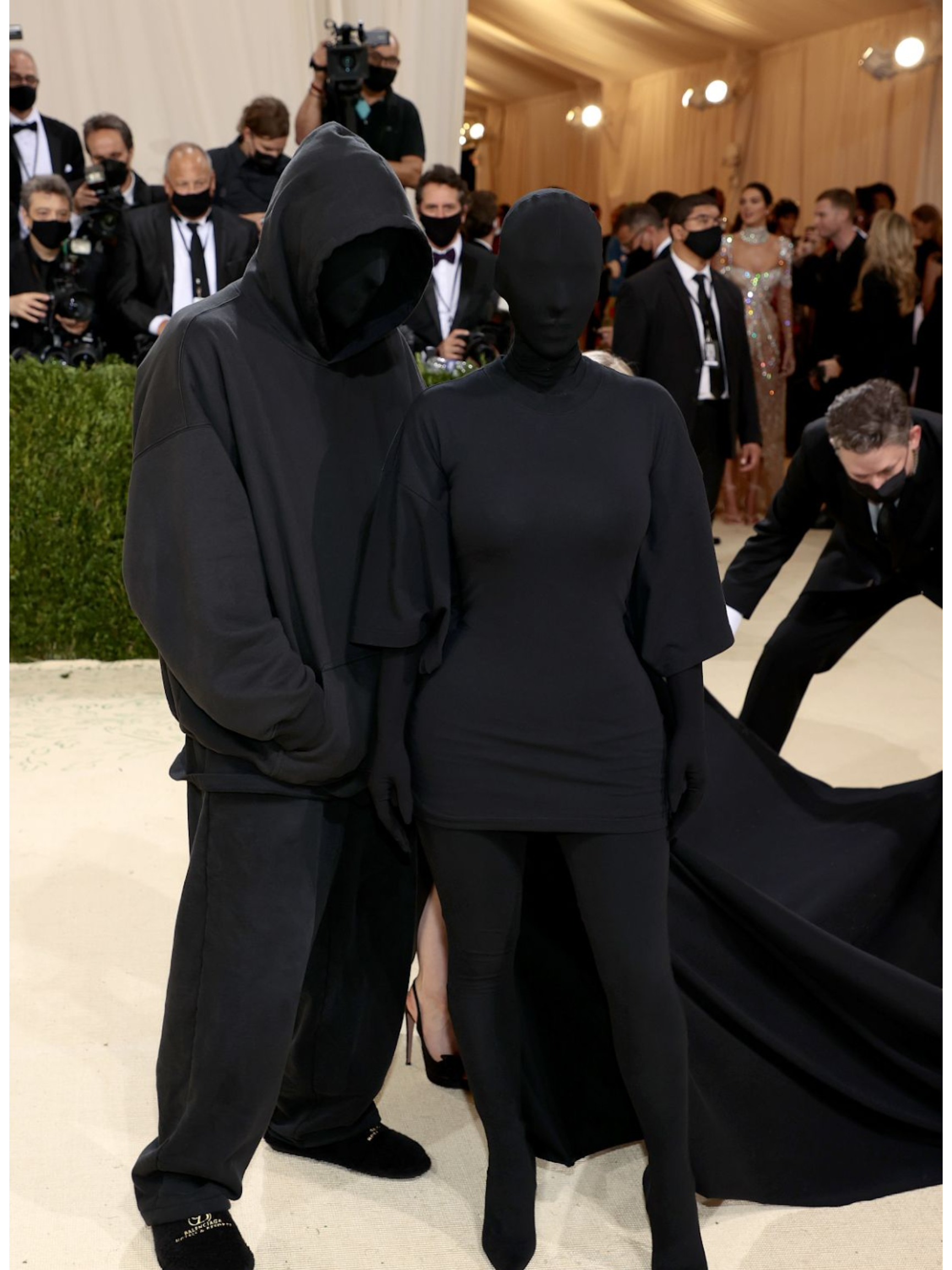
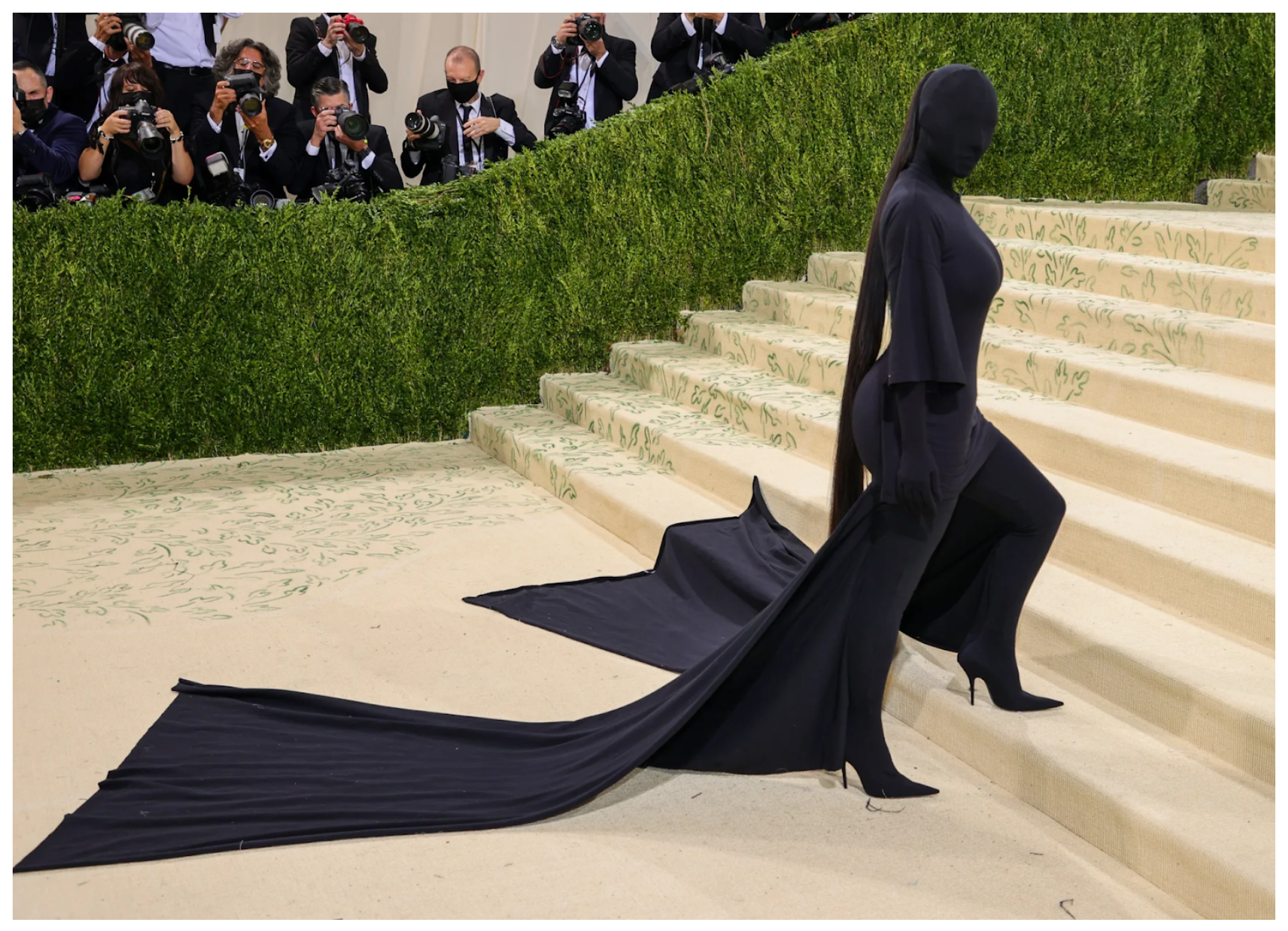
While this might be true, there have been past instances where it seems as if Demna understands the new generation better than they understand themselves. One of the most notable examples of Demna’s subversion was Kim Kardashian’s 2021 Met Gala look wearing his Balenciaga (Right). Covered head to toe in pitch black fabric, Kim walked the steps of the most coveted fashion event of the year, with none other than Demna on her shoulder (Right, Bottom). However, it was called “bizzare”, distasteful, and one writer for The Independent even accused her of mocking burkas: a full body covering worn by many Muslim women. But that was four years ago, and audiences have since overcome their shock and have begun to appreciate the art. Now, the look is regarded as a revolutionary statement on the cultural significance and universal impact of Kim Kardashian.
But is this what Gucci is looking for? A jaw dropping, anticultural rebrand that might turn heads for all the wrong reasons? These were some of the speculatory fears when Demna’s arrival to Gucci was announced in March. After all, the brand wanted someone strong and opinionated, not enraging.
Many of these doubts and concerns are far from being answered. Unlike other culturally significant industries, fashion is unique because it doesn’t just stand the test of time —it revels in it. Fashion becomes truly extraordinary when it has marinated in history and can be viewed in the broader contexts of culture and society. It will be years before Demna’s arrival to Gucci can be properly evaluated, just as it took years for the world to admire the audaciousness of Kim’s Met look. So while Demna’s debut Gucci collection is a likely indicator of his intentions with the brand, every garment, accessory and runway he produces must be taken with a grain of salt.
Earning public approval as a brand’s new designer means acting in accordance with the unwritten, impossible, and ever-so hypocritical rules of fashion. These rules might actually be some of the only ones Demna follows- yet he excels, earning “A’s” in the form of nods of approval from the front row of fashion week attendees.
7 Rules For A Designer’s First Collection At A New Fashion House:
To earn the public’s approval, a new designer’s debut must (1) emulate the historical identity of the fashion house- but (2) can’t be outdated- while (3) pushing creative boundaries without (4) being too experimental, and (5) they should obviously apply their own creative identity to the company- but (6) must remain modest- in order to (7) cultivate a refreshing, yet recognizable, yet just avant garde enough, collection of clothing.
Filled with hypocrisy, these impossibly narrow parameters are integrated into the audience’s expectations of couture designers. Demna knows this critical juxtaposition exists, and he knows that the entire world of fashion will watch him with the narrow eyes of a predator, ready to tear apart his creative identity. So he held up a mirror.
Ascribed to Avowed: Demna’s takeback of stereotypes as a method of civil disobedience.
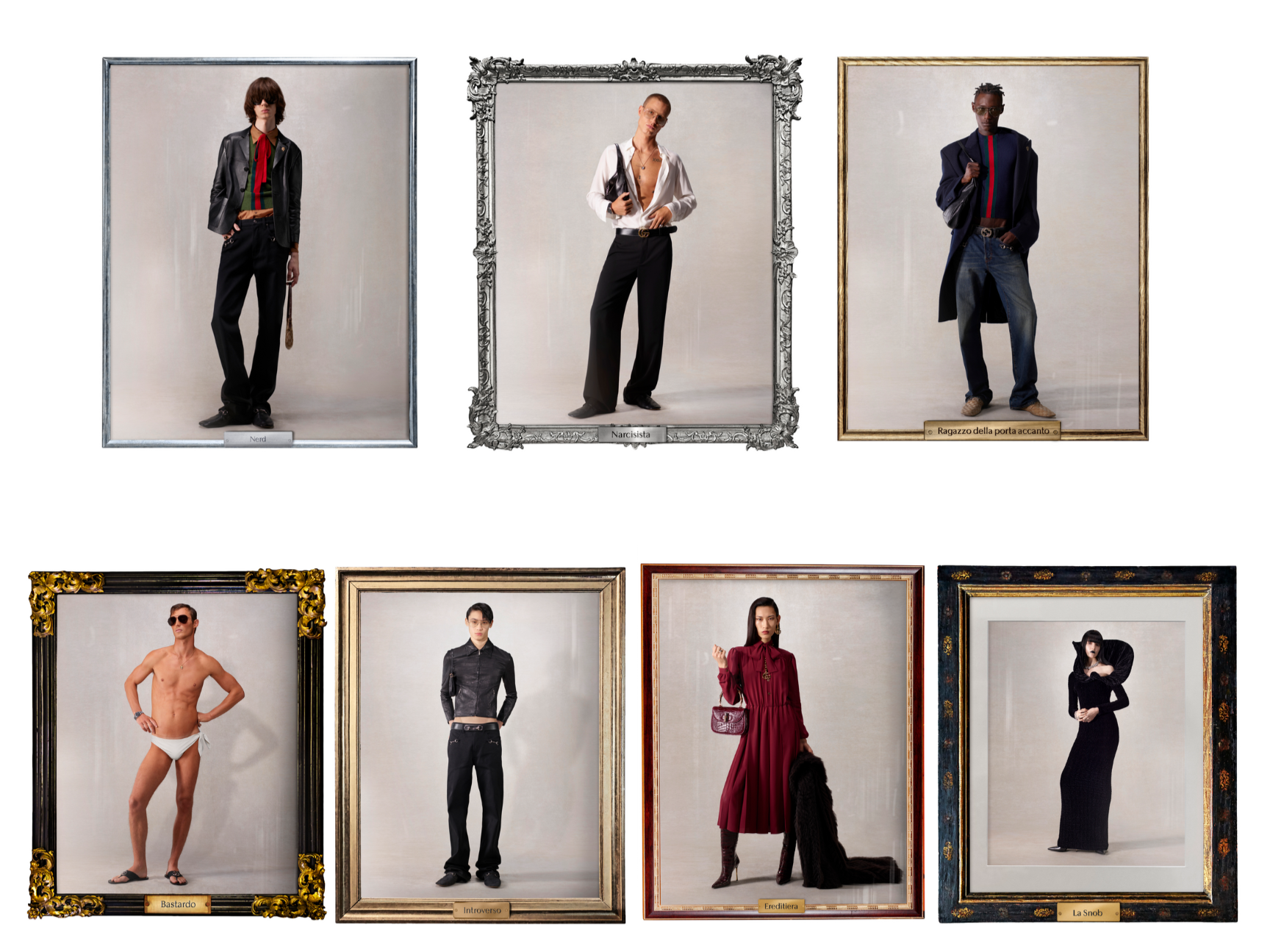
La Famiglia” portrays the literal appearance of ascribed stereotypes with confidence that the social labels seem avowed- or self chosen. This sensationalized depiction of stereotypes is a commentary on the implications of social labels, but also a self-mockery of luxury fashion.
Demna is no stranger to making his opinions on the political landscape known. His Balenciaga Couture show in July of 2021 was notably critiqued because of the casual garments such as sweatpants and hoodies, along with the fierce rebrand of Balenciaga’s identity.
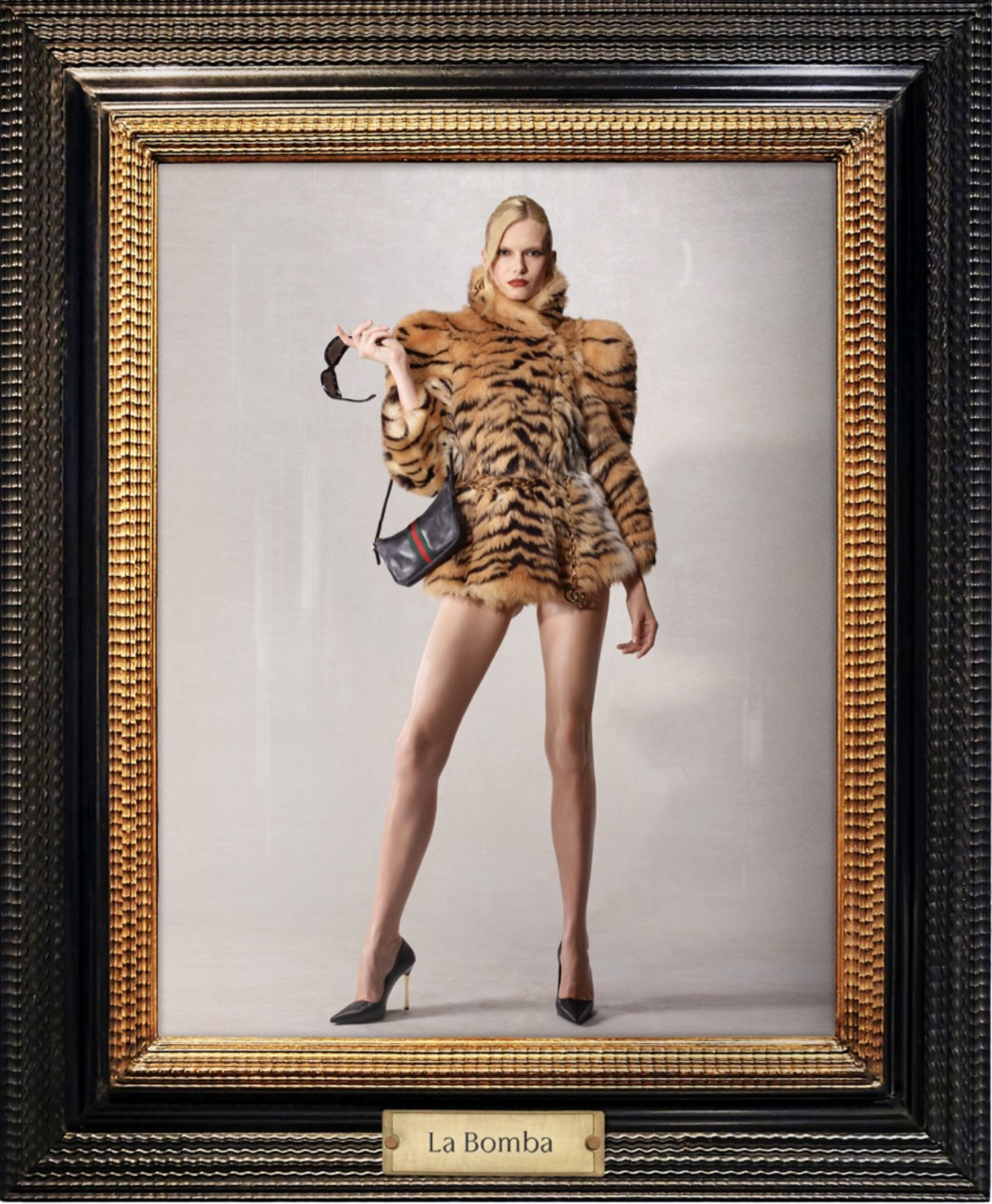
When asked about the show and the purpose of the pieces, Demna answered: “It [garments] is political and social commentary on what is happening around us. I want to go into what a trench coat actually represents, its social status.” “La Famiglia” could be just as political; the collection is like a subtle artistic acknowledgment that fashion is not the most important, sacred, or defining part of human culture and society right now. Such self-mockery became clear when stars arrived at the Milan premiere wearing pieces from the collection whose names reflected their real lives. Supermodel Alex Consani arrived wearing the look “The Bomb” (Left, Top) which she modeled herself in the lookbook(Right, Bottom). In 2024, Consani was named Model of the Year at the Fashion awards, being the first transgender woman to do so. Her recognition shattered the glass ceiling for trans women, and her fiery speech acknowledged the transgender trailblazers that came before her. Dressing her in “The Bomb” was the only acceptable choice for such an explosive and eccentric icon.

Speaking of icons, Gwenyth Paltrow was in attendance donning a look titled “The VIP” (Left, Middle). It’s no coincidence that the uber-famous actress was dressed in the only look consisting of the Gucci logo head-to-toe. The outfit is as recognizable as Gwenyth herself, with neither needing an introduction. Demi Moore who also portrayed Barbera Gucci, (the fictional head of Gucci in “The Tiger”) posed for a photograph with Anna Wintour (Right, Bottom) wearing a look titled “The Patron”.
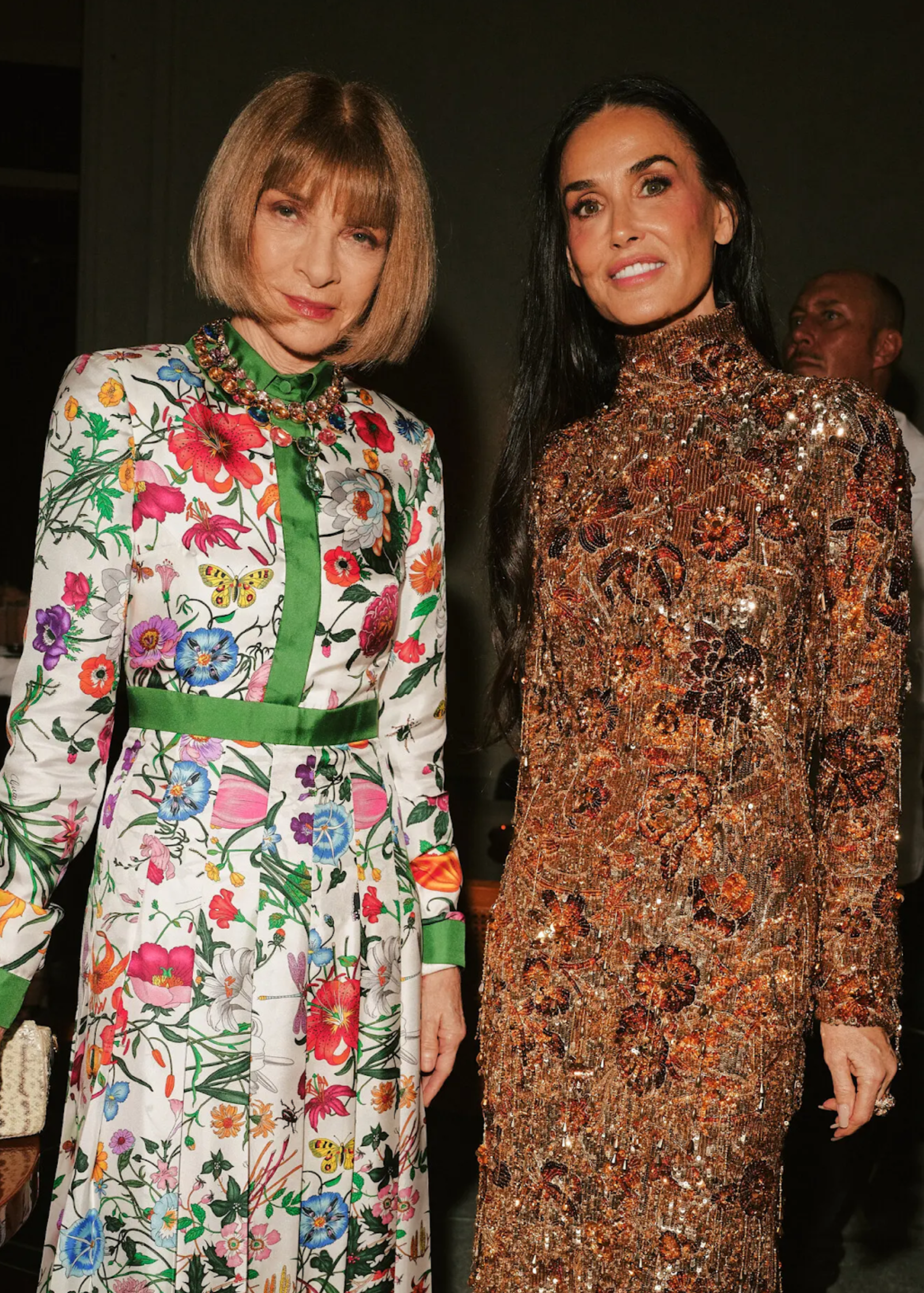
The Golden Globe Winner is known to frequently indulge in art auctions and galleries, and in addition to her career’s contribution to the world of film, has been public about her belief in the value of the arts and how “fashion and films and art offer beauty and hope.”
The correlation between outfit and character, character and human, human and their societal label is indisputably present in the collection and its launch. Is Demna mocking these celebrities? Or is he mocking the concept of a universal label? His direction for the show’s guests to wear specific pieces is relatively common for high fashion houses, but the clever concept to integrate human identities with eccentric stereotypes is an example of how he weaves social commentary throughout his clothes. The eccentricity and unapologetic nature of this collection inherently captured “The Gucciness of Gucci” making it in many eyes, a full success.
Clothes are used to tell a story and encapsulate an identity. In addition to practicality, clothes are a tool to step into such identities, such as judges wearing robes, businessmen wearing suits, doctors wearing white coats, even pole dancers wearing high heels. Individuals dress according to what they believe to be ‘themselves’, so what happens when you open your closet and your clothes are asking “who are you?”.
Such is the purpose of “La Famiglia”: it is a collection that forces one to reflect on themselves, rather than reflecting themselves onto their clothes. Are you a nerd? If you choose to wear look #7, “Nerd” (top, left) , Demna might believe you to be one. You might be a “Narcissist” (top, middle) or at least, your closet might be declaring you to be. Maybe you’re a spinning image of the “Boy Next Door” (top, right) as described in oh so many romantic novels. A Bastard, an introvert, an heiress, a snob, (bottom, left to right) “La Famiglia” allows one to consciously choose an identity when choosing clothes, forcing the wearer to first define themselves. Therein lies the genius of Demna: this collection doesn’t beg the question “who are you wearing” but rather “who do you want to be?”